Shipping from India to the Middle East in 2026: The Gulf Freight Map Is Changing Fast
For years, shipping cargo from India to the Middle East followed a predictable route. Containers crossed the Strait of Hormuz and flowed steadily into the UAE, Saudi Arabia, Qatar and Oman. In 2026, that system is under pressure. Rising military tensions and blockade concerns around the Strait of Hormuz are disrupting one of the world’s most important maritime corridors. What was once a standard shipping route has now become a high-risk zone, forcing freight operators and businesses to rethink
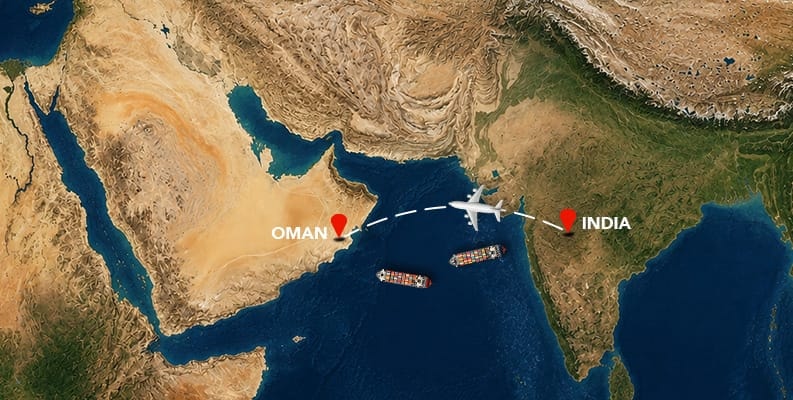
For years, shipping cargo from India to the Middle East followed a predictable route. Containers crossed the Strait of Hormuz and flowed steadily into the UAE, Saudi Arabia, Qatar and Oman.
In 2026, that system is under pressure.
Rising military tensions and blockade concerns around the Strait of Hormuz are disrupting one of the world’s most important maritime corridors. What was once a standard shipping route has now become a high-risk zone, forcing freight operators and businesses to rethink how cargo enters the Gulf. The effects are already being felt across the logistics industry.
Freight Costs Are Rising Rapidly
One of the biggest impacts has been the sharp increase in shipping costs. Freight rates into the Gulf have surged nearly 4 to 6 times above normal levels as carriers introduce emergency war-risk surcharges and reroute vessels away from sensitive waters.
Businesses are also facing:
- Higher insurance premiums
- Delayed vessel schedules
- Growing port congestion
- Longer transit uncertainties
For companies dependent on smooth inventory movement, every delay now carries operational and financial consequences.
Alternative Gulf Ports Are Becoming Critical
As pressure grows around traditional shipping lanes, several ports outside the Strait of Hormuz are quickly emerging as safer and more strategic alternatives.
Fujairah: UAE’s East Coast Gateway
Located outside the Strait of Hormuz, the Port of Fujairah has become one of the UAE’s most important logistics hubs in 2026. The port has seen a major rise in activity, including a reported 38% surge in crude exports, as businesses shift cargo away from higher-risk Gulf routes.
Why Fujairah matters:
- Safer maritime access
- Reduced geopolitical exposure
- Faster vessel movement during congestion
- Strong road connectivity into Dubai and Abu Dhabi
For many exporters, Fujairah is no longer just an alternative port. It is becoming a strategic gateway into the UAE.
Khor Fakkan: Handling Overflow Cargo
Khor Fakkan Container Terminal is also playing a major role in keeping Gulf trade moving. Positioned outside the Strait, the terminal is absorbing massive overflow cargo redirected from congested or high-risk shipping zones.
Its advantages include:
- Efficient deep-water container handling
- Flexible rerouting options
- Lower congestion risks
- Faster cargo redistribution into Gulf markets
Sohar Port, Oman: The Land-Bridge Solution
Oman’s Sohar Port is becoming one of the smartest alternatives for UAE-bound cargo.
Instead of relying entirely on Gulf maritime access, businesses are routing cargo into Sohar and transporting shipments directly into the UAE through bonded trucking corridors.
This land-bridge strategy offers:
- Reduced maritime risk
- Stable customs movement
- Faster inland delivery into the UAE
- Greater supply chain flexibility
For many businesses, Sohar is becoming a dependable backup route during periods of regional instability.
Sea Freight or Air Freight?
Despite current disruptions, sea freight remains the most cost-effective option for bulk cargo such as textiles, machinery, construction materials and industrial goods.
Businesses typically choose:
- FCL (Full Container Load) for larger shipments
- LCL (Less than Container Load) for smaller shared cargo
Transit times from India to the UAE generally range from 4 to 8 days. Meanwhile, air freight is seeing increased demand for electronics, pharmaceuticals, perishables and urgent commercial shipments.
Air freight offers:
- Faster delivery timelines
- Lower exposure to maritime disruptions
- Better shipment security
- More predictable schedules
Most shipments from India to the UAE arrive within 1 to 2 days by air.
In today’s shipping landscape, stability has become just as important as speed and having the right logistics partner can make all the difference in ensuring cargo moves safely, efficiently and without disruption across the Middle East.